The Future of AI in the Landscape Industry
For decades, the landscape sector has followed a predictable and respected path. Growth was rooted in craftsmanship, local reputation, and the steady cultivation of client trust. Success depended on the physical quality of the work and the hard-earned experience of owners who knew how to design, build, and manage complex outdoor projects.
While these traditional foundations remain the heartbeat of the trade, we are currently witnessing a massive technological pivot. In 2026, the future of AI in the landscape industry is no longer a distant concept—it is a practical reality. Artificial intelligence has moved beyond experimental “chatbots” into a robust suite of systems that are reshaping how the most successful firms operate behind the scenes.
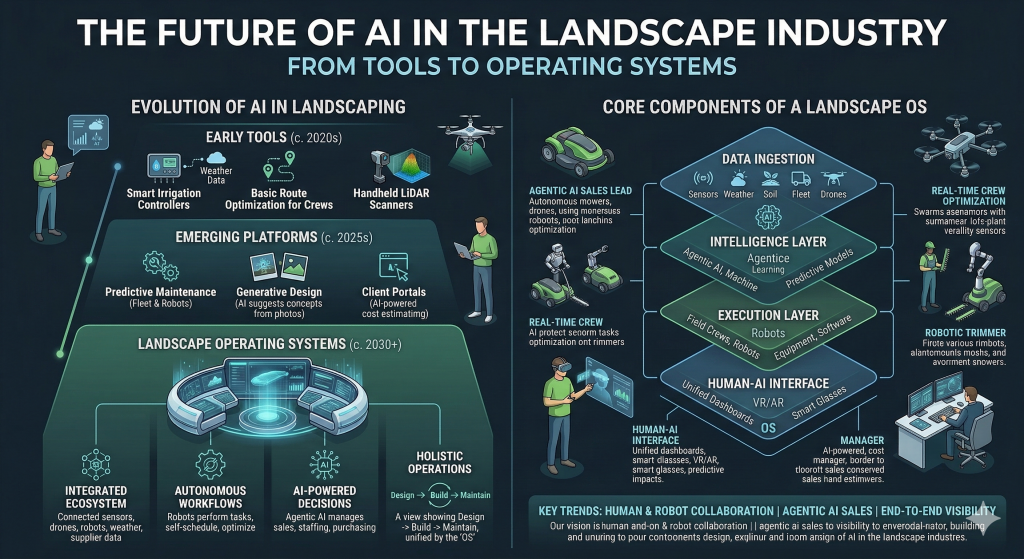
The Evolution of AI Adoption: The Next Phase
Currently, many landscape business owners are in the “experimentation” phase. You might use AI to draft a quick Instagram caption or polish an email. While helpful, these are isolated tasks.
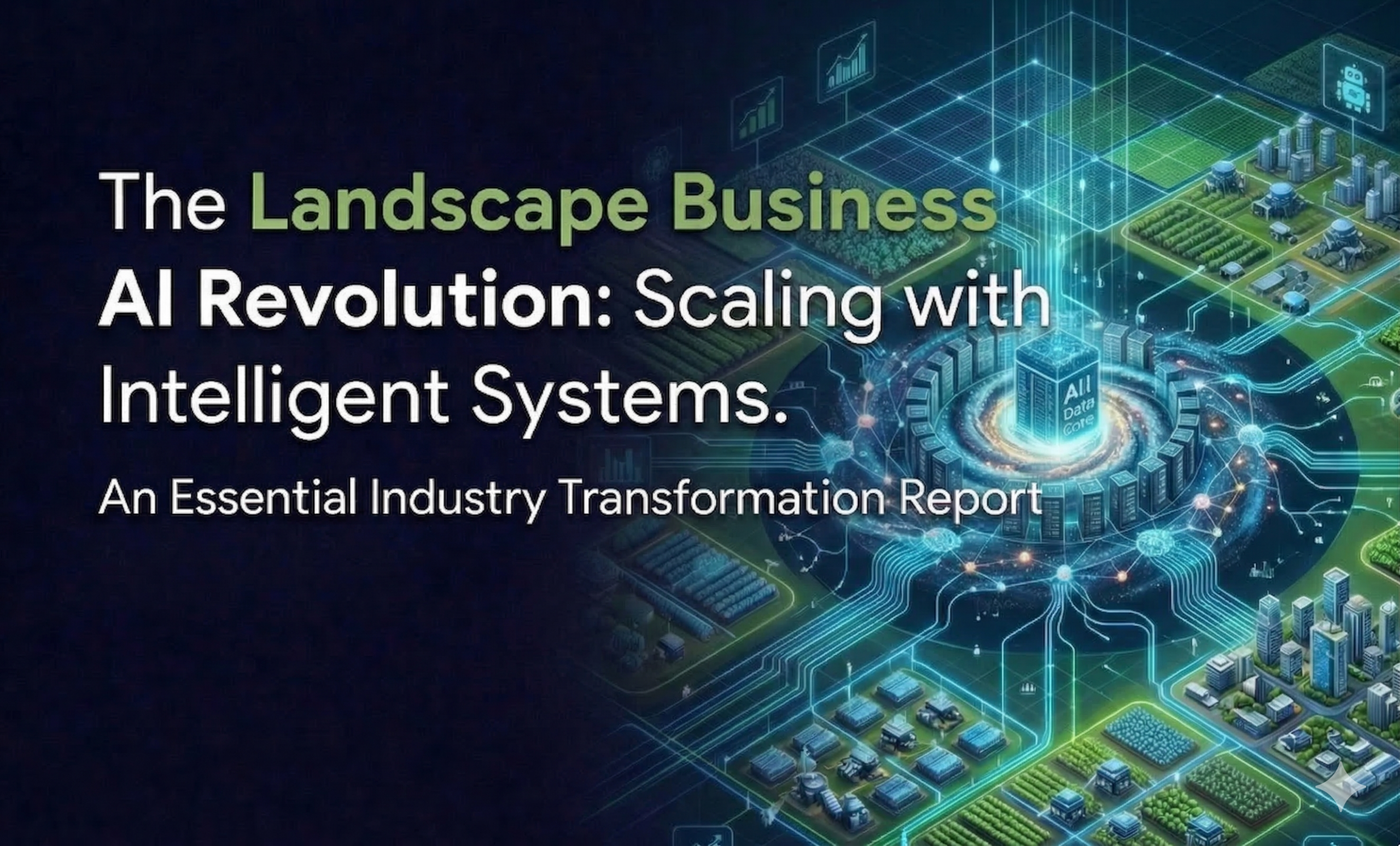
The future of AI in the landscape industry lies in integrated systems. Rather than using disconnected tools, forward-thinking companies are building an “AI backbone” where intelligence supports every department simultaneously—from the first customer enquiry to the final site inspection.
Moving from “Owner Instinct” to Structured Systems
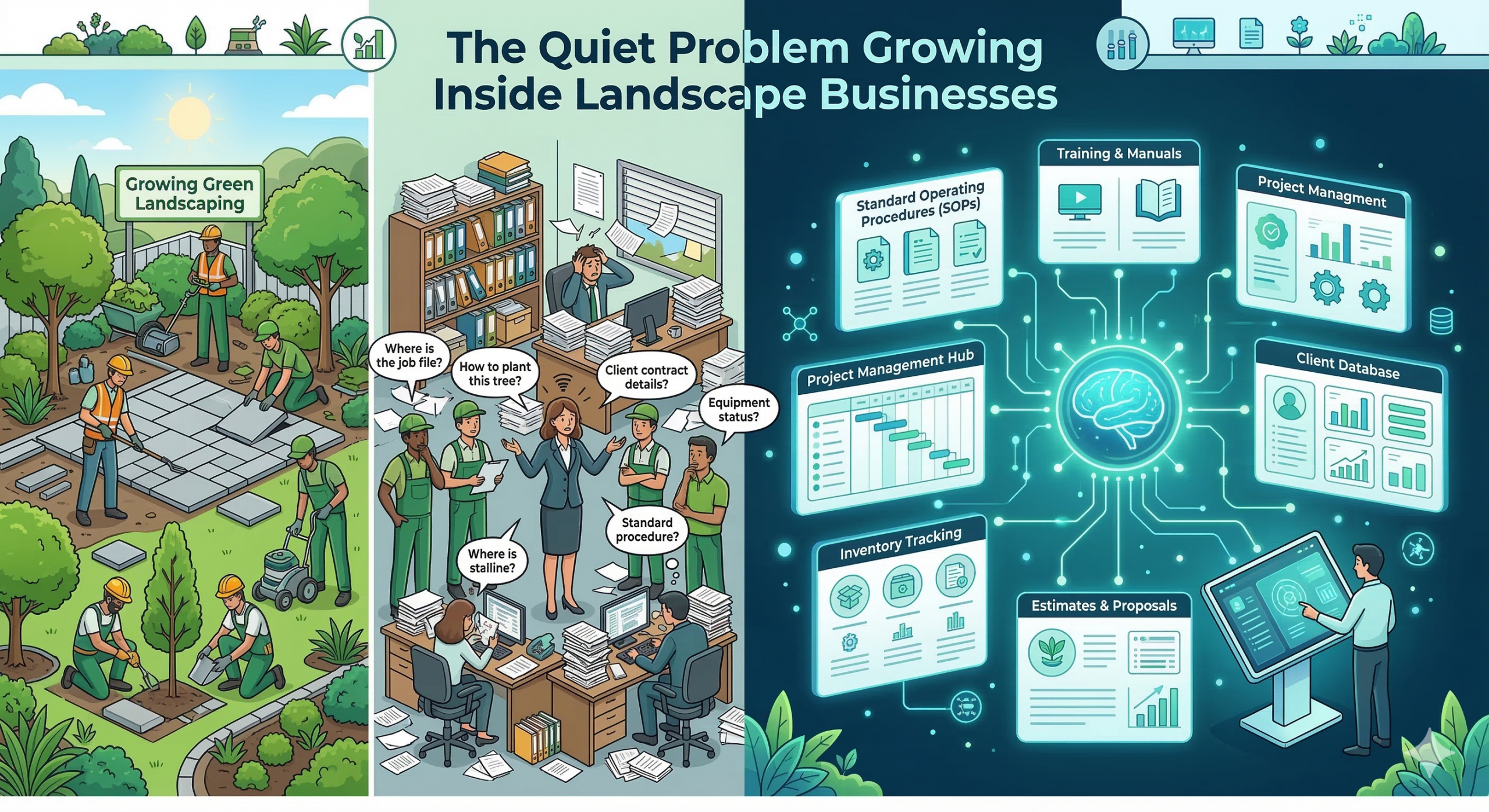
A common bottleneck in landscaping is that the “Company Brain” lives entirely inside the owner’s head. Decisions on pricing, hiring, and project management are often made by gut feeling.
AI makes it possible to “download” that expertise into a structured system. This shift is critical for scaling a landscape company without the owner burning out.
The AI Coach: Acts as a strategic partner to help you analyse market trends, explore expansion strategies, and move from reactive “firefighting” to deliberate, long-term planning.
The AI Assistant: Automates the “admin tax” by documenting SOPs (Standard Operating Procedures), generating professional proposals, and handling daily operational queries.
Transforming How Landscape Businesses Win Work
The sales process is where many firms lose money through simple “friction.” A lead comes in while the crew is on-site, and by the time the owner responds that evening, the client has already booked a competitor.
In the future of AI in the landscape industry, AI Sales Agents will act as your 24/7 front office. These systems:
• Respond instantly to web and social media enquiries
• Qualify leads based on your specific budget and location criteria
• Book consultations directly into your calendar
This ensures your time is spent on high-value design discussions, not chasing unresponsive leads.
Capturing and Distributing Company Intelligence
As teams grow, the owner often becomes a human “help desk,” answering the same questions about materials or pricing dozens of times a week.
Custom AI Chatbots solve this by acting as an internal intelligence resource. Trained on your specific pricing models and service standards, these bots allow your team to access consistent information instantly. This reduces reliance on a single person and ensures project consistency across multiple sites.
Building Resilient Teams via AI Analytics
Despite the rise of technology, landscaping will always be a people-led business. However, AI can now support the “human” side of the trade. Using an AI Team Dynamics Profiler, owners can:
• Identify behavioural strengths within their crews
• Make data-driven recruitment decisions
• Build a more positive, collaborative working culture by understanding how different personalities interact
Conclusion: The “Intelligent” Landscape Business
The future of AI in the landscape industry represents a rare opportunity to pair elite craftsmanship with modern, scalable systems. When strategic thinking, sales, and internal knowledge are all connected through an AI operating system, the business becomes more stable, more profitable, and far easier to manage.
The fundamental nature of landscaping—creating beautiful, functional outdoor spaces—won’t change. But the businesses that thrive in 2026 and beyond will be those supported by intelligent systems that help them work smarter, not just harder.