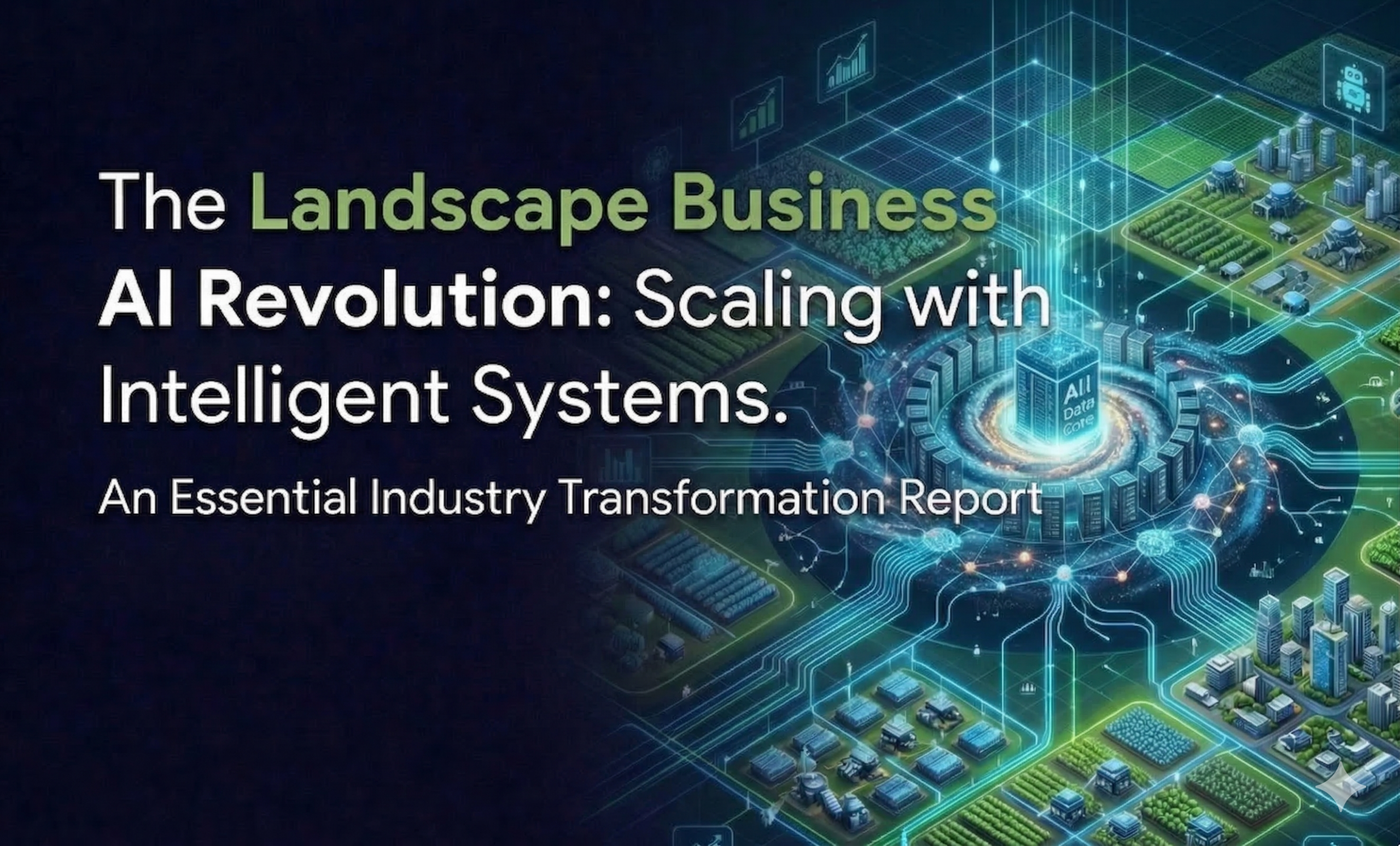
Building Landscaping Business Systems with AI
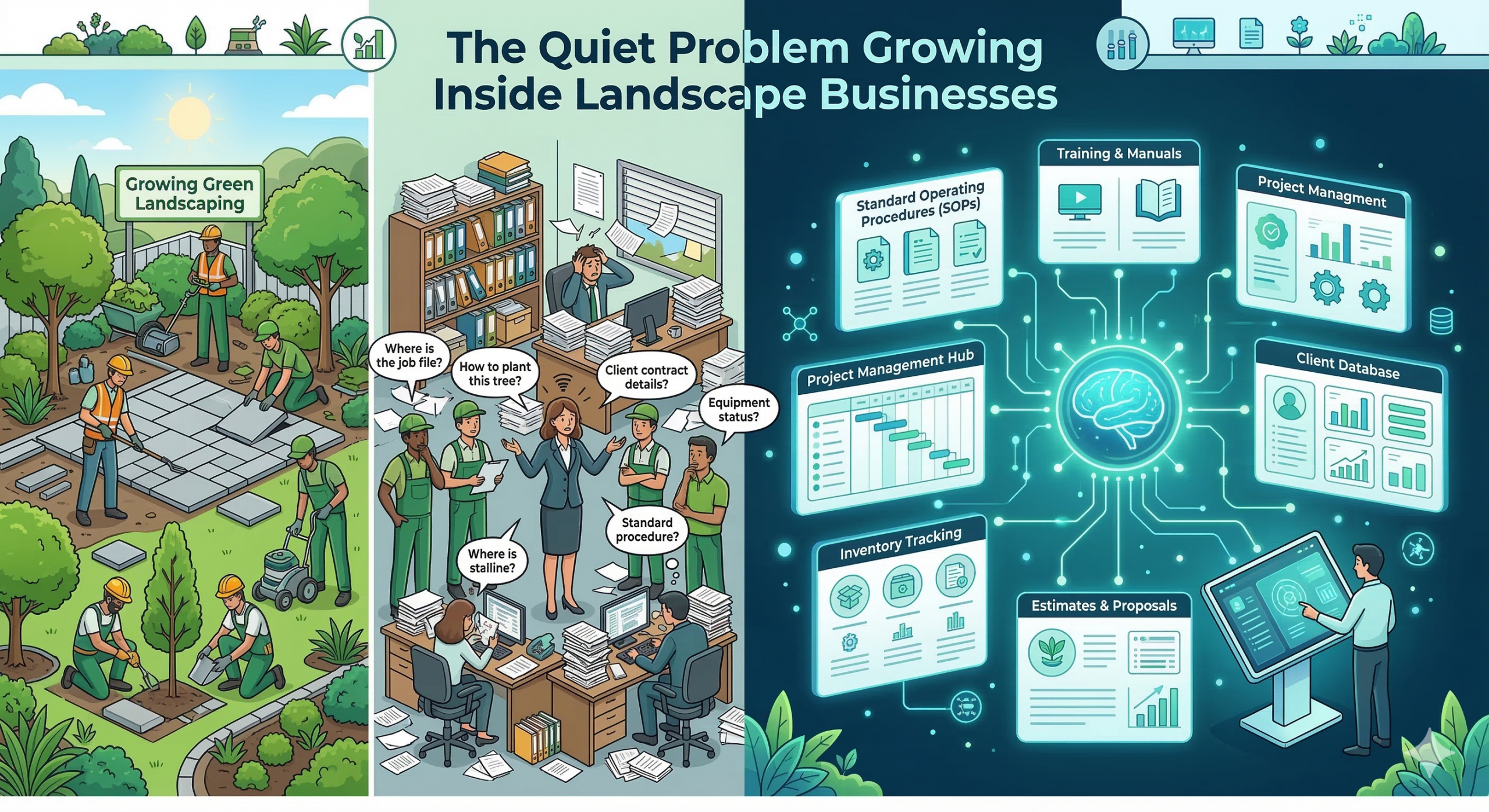
For many landscape business owners, the word “systems” can feel overly corporate or unnecessarily complicated. Most companies begin with a single skilled craftsman whose reputation gradually builds a team. In these early stages, landscaping business systems tend to develop organically — the owner acts as the pricing engine, lead manager and site supervisor all at once.
However, as the business grows, this informal, “mental” system becomes a constraint. Without structured processes, the owner remains the central point for even minor decisions, leading to burnout and limiting further growth. Fortunately, artificial intelligence is now making system development faster and far more accessible for landscape professionals.
Why Landscaping Business Systems Are Critical for Growth
A business system is simply a repeatable way of completing a task. It ensures that your standards are maintained, even when you are not physically present on-site. Within the green industry, effective systems are essential for:
• Lead management: Standardising how new enquiries are handled
• Quoting and estimation: Maintaining consistent and profitable margins across projects
• Operational workflows: Defining clear stages for preparation, installation and completion
• Team onboarding: Reducing the time required to train and integrate new staff
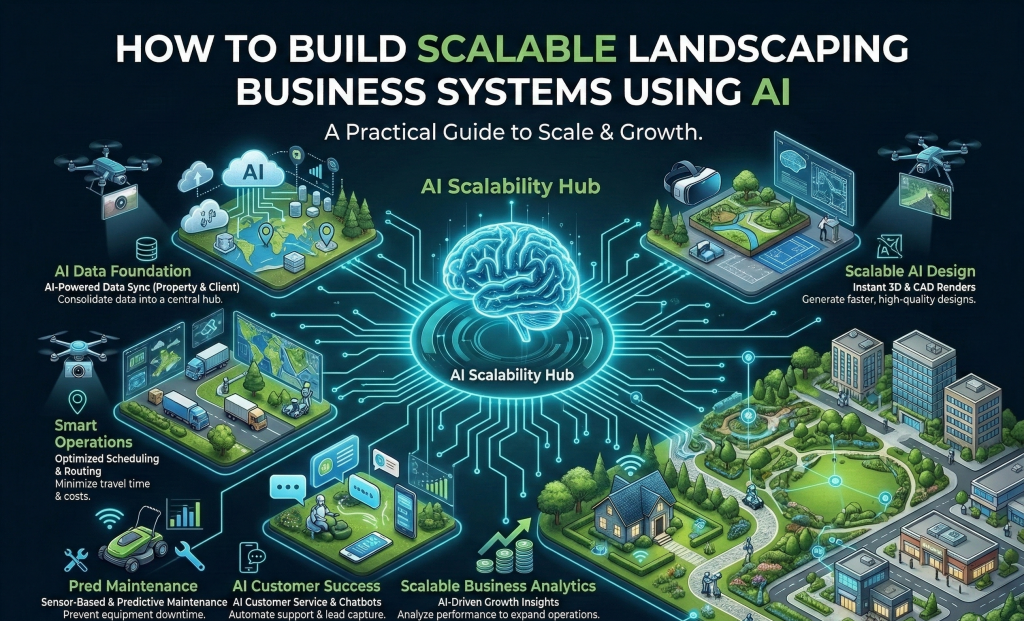
By implementing AI for landscape contractors, these informal processes can be transformed into structured, scalable assets that allow your business to operate without constant oversight.
Using AI to Document and Automate Workflows
One of the biggest barriers to building systems is what can be described as “documentation debt” — the time and effort required to write manuals and Standard Operating Procedures (SOPs).
An AI Assistant removes much of this friction. Rather than starting from a blank page, an owner can record a simple voice note describing a process — for example, a “spring clean-up workflow” — and the AI will transcribe and structure it into a clear, step-by-step procedure.
This approach transforms your experience into a company-wide resource in a matter of minutes, rather than weeks or months.
Capturing Internal Knowledge with AI
In many landscape businesses, the most valuable knowledge — supplier relationships, construction techniques and pricing logic — exists only in the owner’s head. This creates operational risk and limits scalability.
Custom AI chatbots provide a solution by acting as a secure, centralised knowledge base. When trained on your internal data, your team can access instant guidance by asking practical questions such as:
• “What is our standard margin for natural stone patios?”
• “Which supplier do we use for drought-tolerant planting schemes?”
• “What is the client communication protocol following weather delays?”
This level of structured access improves operational consistency and allows your team to work more independently, while still maintaining your standards.
Strengthening Your Team with AI Insights
Even the most effective systems depend on the people implementing them. Building a scalable business is not only about processes, but also about aligning those processes with the right individuals.
Tools such as AI Team Dynamics Profilers provide insight into communication styles, behavioural tendencies and leadership potential within your team. By aligning responsibilities with individual strengths — for example, placing highly organised team members in charge of inventory or scheduling systems — you significantly increase the likelihood that your systems will be followed effectively.
Conclusion: Building a Future-Proof Landscape Business
Artificial intelligence does not replace the craftsmanship at the heart of the landscaping trade. Instead, it provides the structure required for that craftsmanship to scale.
By using AI to build robust landscaping business systems, you are not simply adopting new technology — you are creating a more organised, efficient and commercially resilient business. This allows you to deliver consistent quality while positioning your company for long-term, sustainable growth.